
You are currently viewing the United States website Institutional website. You can change your location here or visit other RBC GAM websites.

Welcome to the RBC Global Asset Management site for Institutional Investors

In order to proceed to the site, please accept our Terms & Conditions.

This RBC Global Asset Management (U.S.) Website is intended for institutional investors only.

For purposes of this Website, the term "Institutional" includes but is not limited to sophisticated non-retail investors such as investment companies, banks, insurance companies, investment advisers, plan sponsors, endowments, government entities, high net worth individuals and those acting on behalf of institutional investors. The Website contains information, material and content about RBC Global Asset Management (collectively, the “Information”).

The Website and the Information are provided for information purposes only and do not constitute an offer, solicitation or invitation to buy or sell a security, any other product or service, or to participate in any particular trading strategy. The Website and the Information are not directed at or intended for use by any person resident or located in any jurisdiction where (1) the distribution of such information or functionality is contrary to the laws of such jurisdiction or (2) such distribution is prohibited without obtaining the necessary licenses and such authorizations have not been obtained. Investment strategies may not be eligible for sale or available to residents of certain countries or certain categories of investors.

The Information is provided without regard to the specific investment objectives, financial situation or particular needs of any specific recipient and does not constitute investment, tax, accounting or legal advice. Recipients are strongly advised to make an independent review with an investment professional and reach their own conclusions regarding the investment merits and risks, legal, credit, tax and accounting aspects of any transactions.

Accept Decline
5 minutes to read by  RBC Emerging Markets Equity teamG.Giammattei Mar 30, 2026

On a recent trip to Taiwan, our first management meeting in Taipei ended with a question I wasn’t expecting: “You didn’t ask about CPO?”

I paused, “CPO?” (for the record, CPO stands for Co-Packaged Optics which essentially bring optical connections closer to chips in order to transfer data faster and more efficiently). Add this to an ever-growing list of acronyms – LPU, TPU, COPOS, DLC – and it serves as a good reminder that in AI today, the jargon is multiplying almost as fast as the demand[1].

Over the following days, we met with more than 30 corporates, including most of the key players across the AI supply chain. The proliferation of new acronyms is a symptom of something bigger: an ecosystem expanding rapidly, with new technologies, products and bottlenecks emerging faster than most investors can process, and with demand showing no sign of slowing, if anything, accelerating. Companies across multiple parts of the ecosystem continue to report strong order visibility, ongoing capacity expansion, and a growing pipeline of applications. In many conversations, the most striking takeaway has been that while the pace of investment already appears unprecedented, most still believe this is only the beginning of a much larger infrastructure build-out.
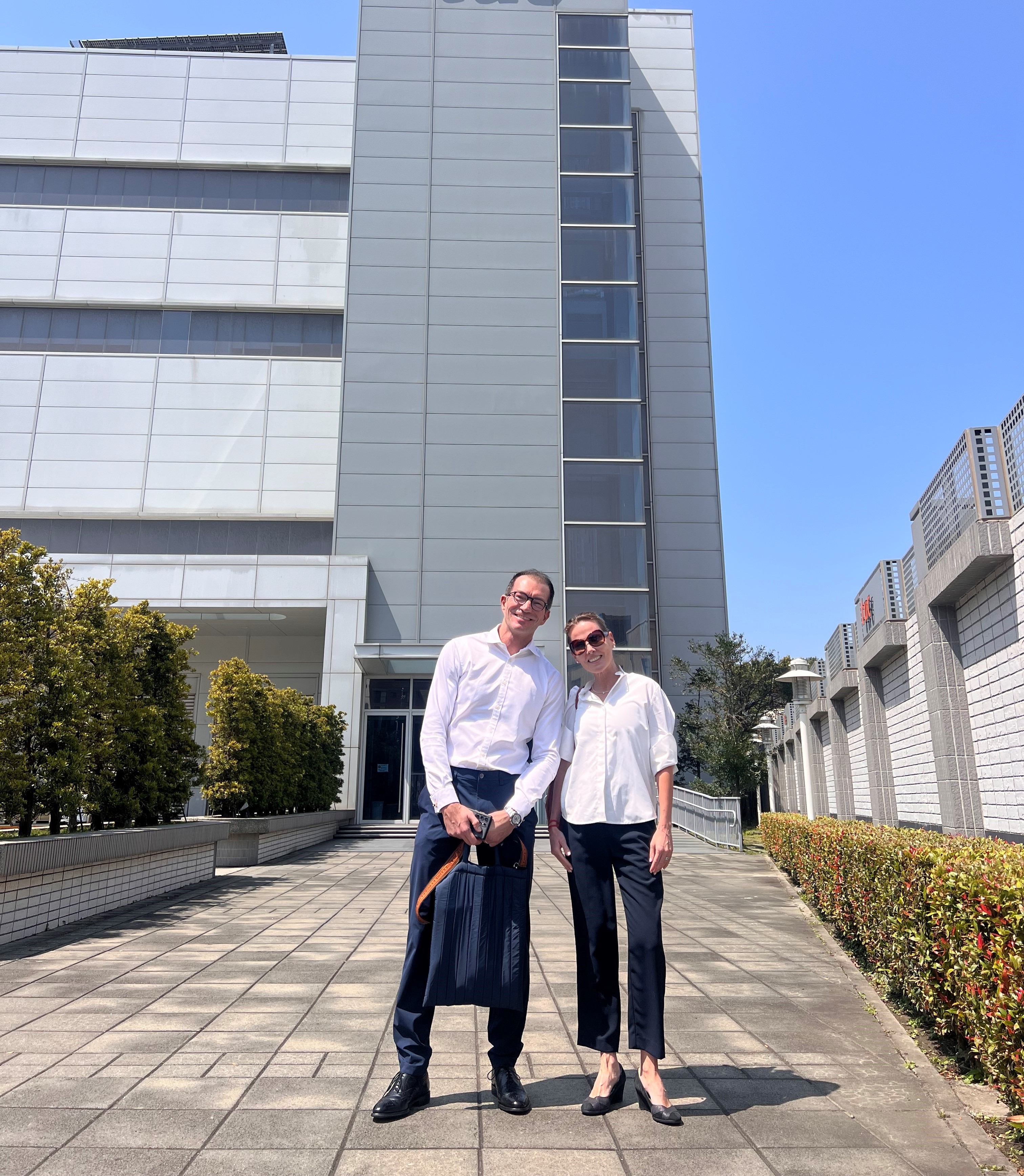
notes-from-the-road-taiwan-pic.jpg
Meetings with corporates in Taipei.

More importantly, this wave of innovation may help explain why valuations look stretched on the surface: earnings are struggling to keep pace with how quickly the total addressable market is expanding, leaving investors constantly playing catch-up. While in Taipei, one of our small cap holdings reported in a single quarter what investors had been expecting for the full year. This is clearly a one-off, but it gives you a sense of the magnitude.

This is not to say there won’t be accidents along the way, and periods of sharp corrections should be expected. It is also worth acknowledging the backdrop of an ongoing geopolitical conflict, with markets already showing signs of risk-off, and plenty of profits to be taken from AI-related equities, which can amplify downside moves. If prolonged, this conflict may even begin to disrupt parts of the supply chain, with inputs such as helium, a key component in semiconductor manufacturing, potentially becoming constrained. Competition is also likely to intensify, particularly as new entrants emerge in certain areas of the supply chain, which could moderate the pace of the earnings growth currently enjoyed by the incumbents. 

Reflecting on the trip, I come away with a renewed sense of optimism and feel more constructive than I did previously: the pace of innovation and breadth of deployment still suggest we are relatively early in the AI cycle.

At the same time, the drivers of AI tech demand are gradually evolving. Demand for semiconductor components remains strong, but there is an increasing focus on system-level efficiency. In that context, three areas in particular stand out as the next key drivers:

The first area is ASICs (Application Specific Integrated Circuits). There is a noticeable shift from GPUs to ASICs for specific tasks. These accelerators are more efficient because they are designed for a single function, allowing for lower power consumption compared to GPUs, which handle a broad range of tasks. This transition will also reduce reliance on Nvidia’s GPUs, opening the door for new players in the semiconductor design space, especially fabless companies focused on creating highly specialised chips like TPUs and LPUs.

The second area is power architecture and thermal management. As AI infrastructure scales and power density increases, these are becoming some of the fastest growing areas of the value chain. The shift from AC/DC to HVDC power systems will likely drive the next leg of growth, but more importantly, as compute density rises and heat generation increases, cooling requirements extend well beyond GPUs and CPUs. Entire server racks will increasingly require integrated thermal management, creating another layer of value within the supply chain.

The third area is the expansion of AI into the physical world. While data centres remain the dominant source of demand today, companies are increasingly looking to robotics, industrial automation, and autonomous systems as the next drivers of growth. These segments are still early, but they have the potential to become meaningful contributors to company earnings over time. The extension of AI into the physical and industrial environments could ultimately prolong the cycle beyond what is currently assumed.

On a parallel note, these shifts do not appear to reduce demand for advanced semiconductor manufacturing, as most approaches still rely on leading-edge nodes and increasingly complex packaging. More broadly, the scope of AI applications continues to expand.

Taiwan remains central to all of these dynamics. While we continue to keep a close eye on valuations, the competitive landscape, and risks from technological displacement, we feel we are well exposed to these trends across our portfolios. The opportunity set is broadening, and with it, the scope for stock picking is improving.


[1] Language Processing Unit, Tensor Processing Unit, Direct Liquid Cooling, Chip On Panel on Substrate.

Disclosure

This material is provided by RBC Global Asset Management (RBC GAM) for informational purposes only and may not be reproduced, distributed or published without the written consent of RBC GAM or the relevant affiliated entity listed herein. RBC GAM is the asset management division of Royal Bank of Canada (RBC) which includes RBC Global Asset Management Inc. (RBC GAM Inc.), RBC Global Asset Management (U.S.) Inc. (RBC GAM-US), RBC Global Asset Management (UK) Limited (RBC GAM-UK), and RBC Global Asset Management (Asia) Limited (RBC GAM-Asia), which are separate, but affiliated subsidiaries of RBC.

In Canada, the material may be distributed by RBC GAM Inc., (including PH&N Institutional), which is regulated by each provincial and territorial securities commission. In the United States (US), this material may be distributed by RBC GAM-US, an SEC registered investment adviser. In the United Kingdom (UK) the material may be distributed by RBC GAM-UK, which is authorised and regulated by the UK Financial Conduct Authority (FCA), registered with the US Securities and Exchange Commission (SEC), and a member of the National Futures Association (NFA) as authorised by the US Commodity Futures Trading Commission (CFTC). In the European Economic Area (EEA), this material may be distributed by BlueBay Funds Management Company S.A. (BBFM S.A.), which is regulated by the Commission de Surveillance du Secteur Financier (CSSF). In Germany, Italy, Spain and Netherlands the BBFM S.A. is operating under a branch passport pursuant to the Undertakings for Collective Investment in Transferable Securities Directive (2009/65/EC) and the Alternative Investment Fund Managers Directive (2011/61/EU). In Switzerland, the material may be distributed by BlueBay Asset Management AG where the Representative and Paying Agent is BNP Paribas Securities Services, Paris, succursale de Zurich, Selnaustrasse 16, 8002 Zurich, Switzerland. In Japan, the material may be distributed by BlueBay Asset Management International Limited, which is registered with the Kanto Local Finance Bureau of Ministry of Finance, Japan. Elsewhere in Asia, the material may be distributed by RBC GAM-Asia, which is registered with the Securities and Futures Commission (SFC) in Hong Kong. In Australia, RBC GAM-UK is exempt from the requirement to hold an Australian financial services license under the Corporations Act in respect of financial services as it is regulated by the FCA under the laws of the UK which differ from Australian laws. All distribution-related entities noted above are collectively included in references to “RBC GAM” within this material.

This material is not available for distribution to investors in jurisdictions where such distribution would be prohibited.

The registrations and memberships noted should not be interpreted as an endorsement or approval of RBC GAM by the respective licensing or registering authorities.

This material does not constitute an offer or a solicitation to buy or to sell any security, product or service in any jurisdiction; nor is it intended to provide investment, financial, legal, accounting, tax, or other advice and such information should not be relied or acted upon for providing such advice. Not all products, services or investments described herein are available in all jurisdictions and some are available on a limited basis only, due to local regulatory and legal requirements. Additional information about RBC GAM may be found at www.rbcgam.com. Recipients are strongly advised to make an independent review with their own advisors and reach their own conclusions regarding the investment merits and risks, legal, credit, tax and accounting aspects of all transactions.

Any investment and economic outlook information contained in this material has been compiled by RBC GAM from various sources. Information obtained from third parties is believed to be reliable, but no representation or warranty, expressed or implied, is made by RBC GAM, its affiliates or any other person as to its accuracy, completeness or correctness. RBC GAM and its affiliates assume no responsibility for any errors or omissions in such information. Opinions contained herein reflect the judgment and thought leadership of RBC GAM and are subject to change at any time without notice.

Some of the statements contained in this material may be considered forward-looking statements which provide current expectations or forecasts of future results or events. Forward-looking statements are not guarantees of future performance or events and involve risks and uncertainties. Do not place undue reliance on these statements because actual results or events may differ materially.

® / TM Trademark(s) of Royal Bank of Canada. Used under licence.
© RBC Global Asset Management Inc., 2026
document.addEventListener("DOMContentLoaded", function() { let wrapper = document.querySelector('div[data-location="inst-insight-article-additional-resources"]'); if (wrapper) { let liElements = wrapper.querySelectorAll('.link-card-item'); liElements.forEach(function(liElement) { liElement.classList.remove('col-xl-3'); liElement.classList.add('col-xl-4'); }); } }) .section-block .footnote:empty { display: none !important; } footer.section-block * { font-size: 0.75rem; line-height: 1.5; }