
Nouvelles de la société
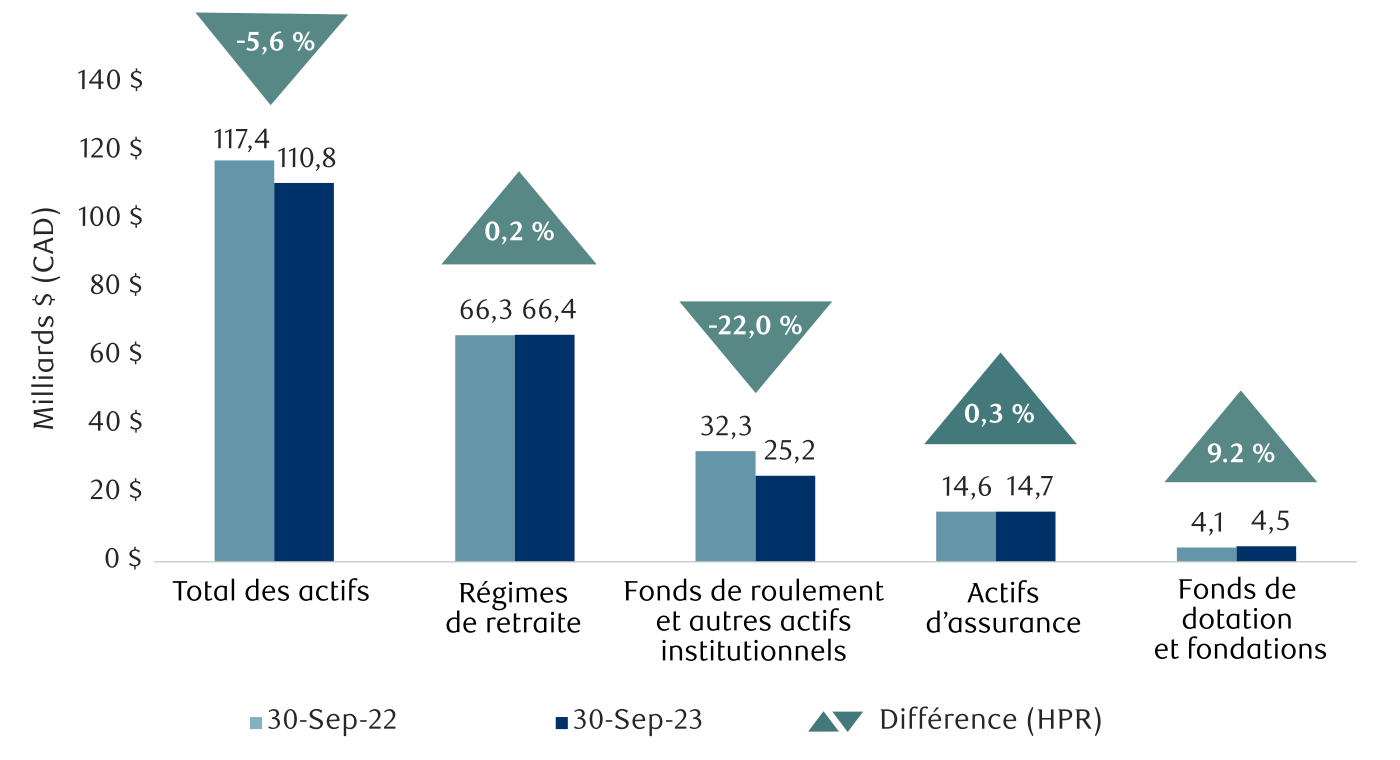
Actifs sous gestion de PH&N institutionnel
Effectif
Amelia Carver s’est jointe à l’équipe Titres à revenu fixe PH&N en juillet en tant qu’analyste du crédit. Auparavant, elle était ingénieure en formation dans un cabinet mondial d’ingénierie, de gestion de projet et de services professionnels.
Événements récents
Au cours du trimestre, nous avons annoncé deux améliorations au Fonds fiduciaire de retraite équilibré PH&N, notre solution d’actifs multiples phare. Nous avons introduit une pondération cible de 2 % à l’égard d’un fonds mondial d’infrastructure, en commençant par une pondération initiale de 1 % qui sera accrue au fil du temps. Nous avons également attribué une pondération stratégique de 4,5 % aux obligations de sociétés mondiales de catégorie investissement, au détriment de la pondération actuelle des obligations d’État mondiales. Le Fonds fiduciaire de retraite équilibré PH&N est géré activement et revu régulièrement pour veiller à ce qu’il cadre avec nos points de vue et nos ressources actuels, et à ce qu’il soit composé de plusieurs stratégies sous-jacentes complémentaires. Ces changements ont pour but d’accroître la diversification, de rehausser les rendements corrigés du risque prévus et de tirer parti de notre expertise et de nos compétences grandissantes en matière de placement.
Revue des marchés
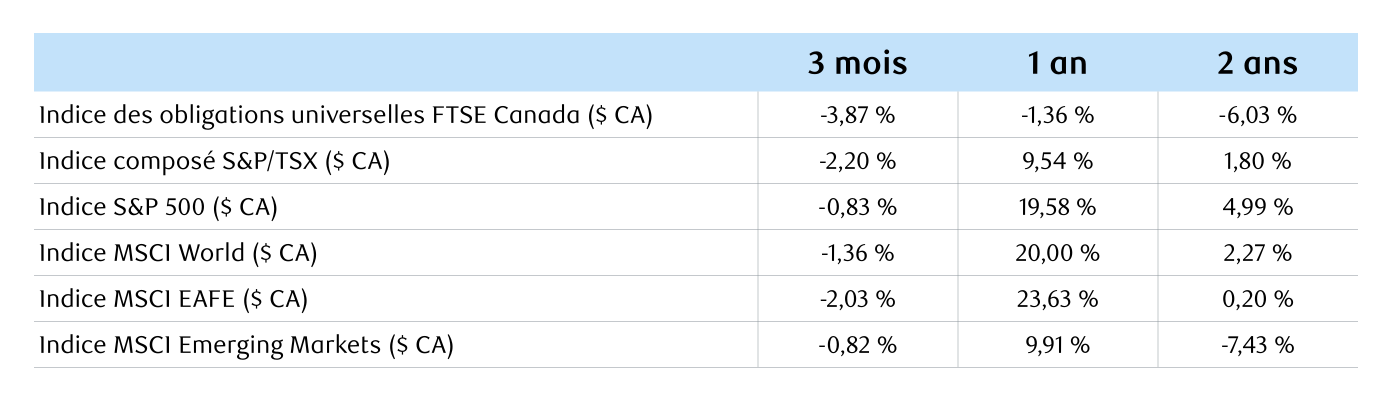
Comparaison du rendement des indices au 30 septembre 2023 (%)
Sources : RBC GMA, FTSE Russell, S&P, MSCI.
Les marchés freinés par la crainte que les taux d’intérêt restent élevés ; les sociétés à mégacapitalisation du secteur de l’IA dominent
Bien que les marchés aient enregistré de solides rendements depuis le début de l’année, ceux-ci ont été négatifs au dernier trimestre, à cause du niveau élevé des taux pendant un temps prolongé. Les « sept magnifiques », c’est-à-dire les plus grandes sociétés cotées en bourse aux États-Unis, qui ont grandement bénéficié des tendances émergentes en intelligence artificielle (IA) et ont orienté la reprise du marché jusqu’à présent, se sont repliées dans ce contexte. Bien que les valorisations des marchés boursiers mondiaux ne soient pas déraisonnables, les bénéfices sont vulnérables à une contraction de l’activité économique, ce qui limite le potentiel de hausse des actions.
Les marchés en baisse au troisième trimestre, bien que le cumul annuel reste solide
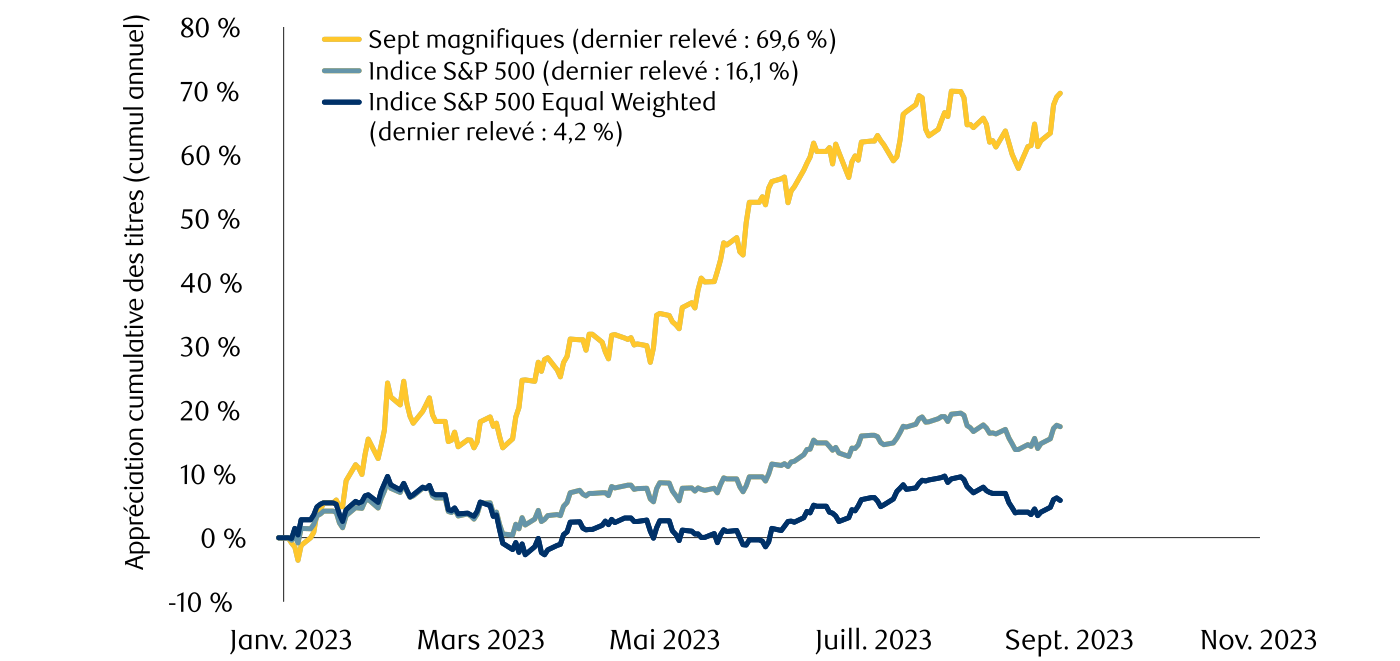
Nota : Au 31 août 2023. Les sept magnifiques constituent un indice pondéré en fonction de la capitalisation qui comprend Apple, Microsoft, Alphabet, Amazon, Nvidia, Meta et Tesla. Sources : RBC GMA et Bloomberg.
Dans la plupart des régions, l’activité économique a poursuivi son expansion depuis le début de l’année. Les tensions touchant le système bancaire local américain se sont atténuées, les actifs à risque se sont redressés et le marché du logement nord-américain a rebondi ce printemps. L’intensification de grandes difficultés contrebalance toutefois ces points positifs. Le rebond économique qu’a connu la Chine à la fin de l’année dernière s’essouffle, l’embauche commence à ralentir et l’emploi temporaire, un indicateur avancé classique du marché du travail, ne cesse de régresser. En outre, les taux d’intérêt ont continué d’augmenter et sont maintenant très élevés au regard des standards du XXIe siècle. Il s’agit là d’un obstacle économique majeur. Les taux des obligations à moyen et à long terme ont sensiblement augmenté en raison de divers facteurs : un resserrement quantitatif, la persistance de déficits budgétaires importants, une abondance d’émissions d’obligations aux États-Unis à la suite de l’épreuve de force sur le plafond de la dette, la hausse des taux des obligations japonaises (qui attirent des capitaux au détriment d’autres marchés de dette souveraine) et même les efforts de la Chine pour soutenir sa monnaie (consistant en la vente d’obligations étrangères à des fins d’achat d’actifs chinois).
Les signes de récession indiquent surtout « oui » ou « probable » : nous estimons à 65 % la probabilité d’une récession au cours de la prochaine année
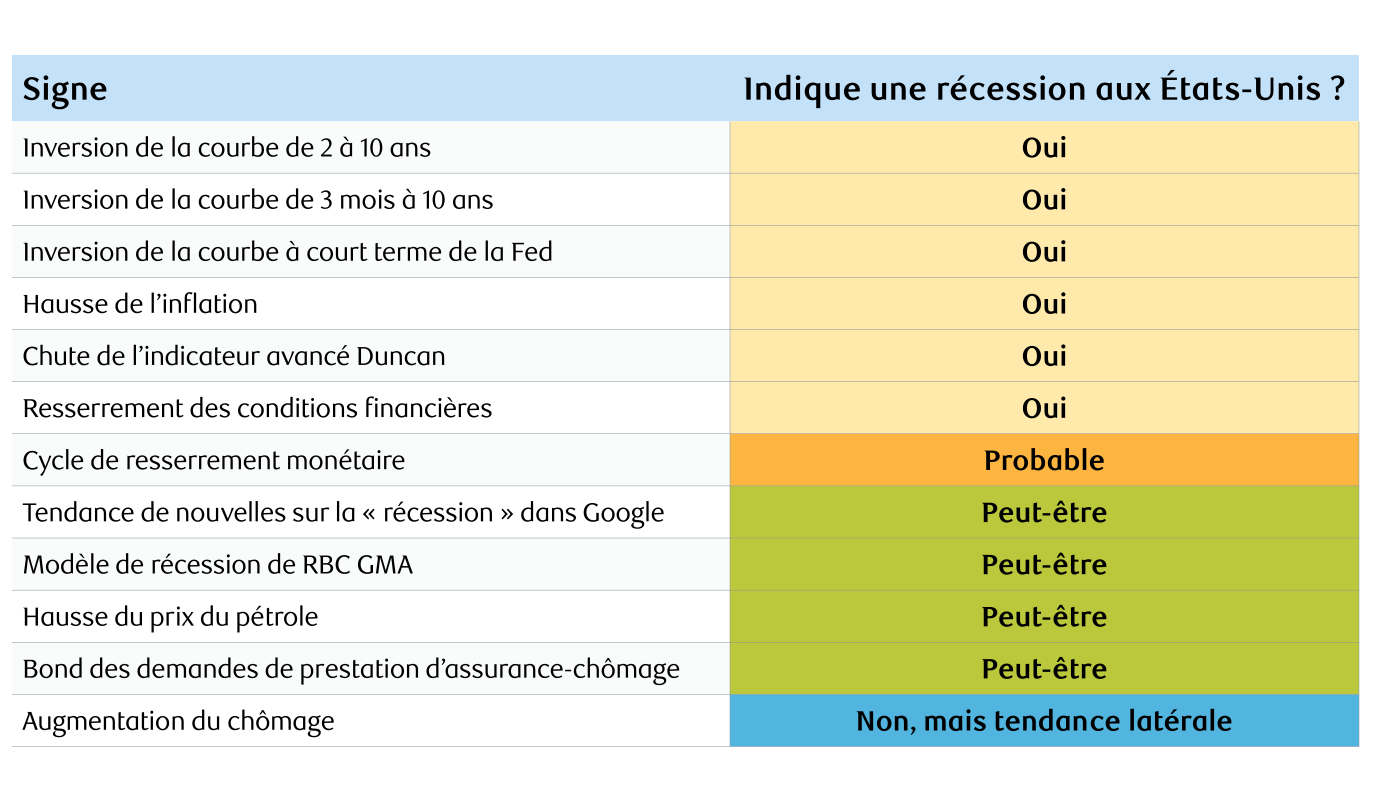
Nota : Au 24 juillet 2023. Analyse de l’état de l’économie aux États-Unis. Source : RBC GMA.
Après une reprise au printemps, le marché du logement – le secteur de l’économie américaine le plus sensible aux taux d’intérêt – amorce une nouvelle fois un ralentissement. Par ailleurs, le taux de défaillance sur cartes de crédit est en forte hausse et atteint maintenant un sommet inégalé en plus d’une décennie. Après une longue pause, des prêts étudiants totalisant près de 2 000 milliards de dollars américains devront commencer à être remboursés en octobre, ce qui nuira à 44 millions d’Américains. De l’autre côté de la frontière, l’économie canadienne commence à ralentir et est susceptible d’entrer en légère récession. Malgré un certain regain de vigueur du marché du logement au printemps, nous prévoyons un retour des difficultés. L’accessibilité à la propriété s’est améliorée par rapport à son pire niveau, mais demeure plutôt médiocre par rapport aux niveaux d’avant la pandémie. En outre, l’économie canadienne a aussi été mise à mal par une série de chocs temporaires, notamment une grève portuaire majeure sur la côte ouest et un été marqué par de nombreux immenses feux de forêt. Cela dit, le pays connaît un essor démographique énorme du fait des niveaux records d’immigration, ce qui a stimulé la demande de biens et de services et a rendu l’économie sujette à une croissance encore plus rapide.
Notre évaluation actuelle de la probabilité de récession est un peu plus faible que lors des trimestres précédents. Elle s’établit à 65 % pour l’économie américaine, qui fait figure de baromètre, par rapport à 80 % auparavant. Dans le cas du Canada toutefois, il semble qu’une légère récession sera presque inévitable.
Si l’inflation continue de chuter par rapport à ses sommets de plusieurs décennies, elle demeure nettement au-dessus de la normale. Les quatre principaux facteurs de l’inflation se sont inversés. La flambée des prix des marchandises qui a suivi l’invasion de l’Ukraine par la Russie s’est inversée, la plupart des problèmes de la chaîne d’approvisionnement ont été réglés, la politique monétaire est passée d’un assouplissement extrême à une position restrictive et la politique budgétaire est devenue beaucoup moins stimulante. Bien que l’inflation ait diminué relativement rapidement l’année dernière, il sera plus difficile d’obtenir d’autres améliorations importantes à court terme pour atteindre l’objectif de 2,0 %, car les prix de l’essence ont rebondi ces derniers mois et les effets de base seront moins favorables. Nous croyons néanmoins que l’inflation pourrait chuter plus rapidement que ce à quoi on s’attend généralement pour atteindre un peu plus de 2,0 % d’ici l’an prochain.
Les banques centrales sont maintenant parvenues à la fin de leur parcours de resserrement monétaire, ou en approchent. Les banques centrales des marchés émergents ont ouvert la voie en augmentant les taux avant les pays développés durant ce cycle, et certaines d’entre elles ont commencé à réduire les taux. Il n’est pas déraisonnable de penser que les banques centrales des pays développés pourraient faire de même l’année prochaine. Selon notre modèle, le niveau « neutre » de la Réserve fédérale américaine (Fed) pour le taux des fonds fédéraux est actuellement de 3,4 %, mais si, conformément à nos prévisions, l’inflation continue de diminuer, il chutera pour atteindre environ 2 % dans 12 mois. Par conséquent, et à la lumière de nos prévisions d’une récession probable, il semble donc peu probable que le taux des fonds fédéraux demeure longtemps à son niveau élevé de 5,5 %. Ce point de vue est conforme aux prix sur le marché à terme, ce qui laisse entrevoir la possibilité d’une nouvelle hausse de 25 points de base d’ici la fin de l’année, suivie par le début d’un cycle de réduction des taux d’intérêt au début de 2024.
L’inflation mondiale a diminué, mais elle demeure élevée
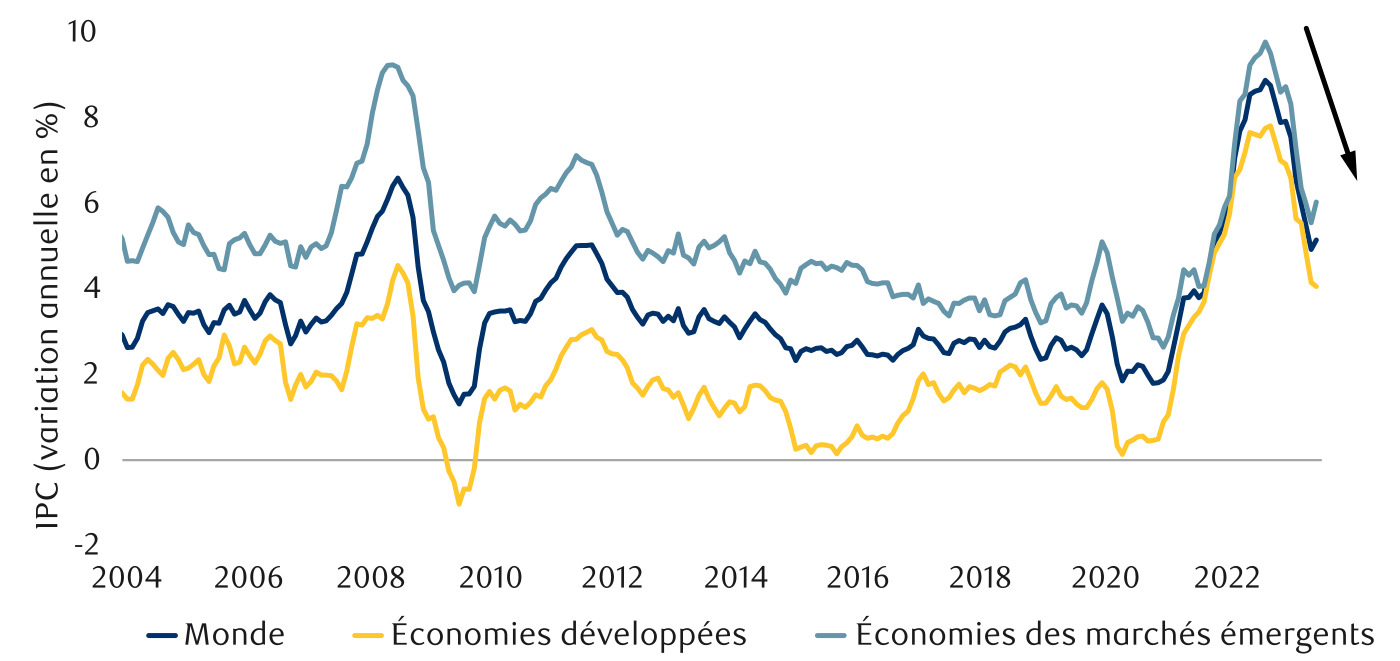
Nota : Données en juillet 2023. Sources : RBC GMA, Haver Analytics, Macrobond.
Les actions des marchés émergents ont surclassé les actions des marchés développés, mais ont quand même fini le trimestre en baisse
Le marché boursier canadien a fini le troisième trimestre en territoire négatif, l’indice composé S&P/TSX ayant reculé de -2,20 % au troisième trimestre, à la traîne du marché américain. Le secteur de l’énergie a mené le bal au cours de la période. Il a profité de la demande de pétrole et de gaz naturel soutenue par la résilience économique continue. Par contre, les services de communications et les services publics ont dégagé le pire rendement, car les taux d’intérêt plus élevés ont réduit l’attrait relatif de ces secteurs qui génèrent habituellement des rendements en dividendes élevés par rapport aux titres à revenu fixe. En fin de compte, les rendements des actions dépendront de l’évolution des taux d’intérêt, de la gravité et de la durée d’une éventuelle récession et de son incidence sur la croissance des bénéfices des sociétés.
Les marchés boursiers mondiaux ont été ébranlés au troisième trimestre, mais demeurent solides depuis le début de l’année. Alors que nous nous rapprochons de la fin de l’année 2023, l’optimisme qui a stimulé les actions après une période baissière semble s’être estompé, principalement en raison de l’augmentation des taux d’intérêt. L’indice MSCI World Net a affiché des rendements négatifs au troisième trimestre et a terminé la période en affichant un rendement de -1,36 %. Une partie de l’optimisme à l’origine de la reprise du premier semestre semble être contre-indiquée, en particulier les attentes selon lesquelles la Réserve fédérale américaine fera bientôt volte-face en abaissant les taux. Il s’en est suivi un repli des actions qui ont procuré au marché la majeure partie de ses gains. Avec ce récent repli, les conditions favorables que les « sept magnifiques » ont procuré au marché ont disparu, et pour assurer le maintien de la reprise depuis le début de l’année, il faudra que les actions de sociétés à moyenne et à petite capitalisation prennent le relais. Par la suite, nous croyons que les risques clés pour les actions tiennent à la politique monétaire rigoureuse, une croissance des bénéfices sous pression, une pression toujours grandissante sur les taux obligataires, un conflit militaire plus vaste en Europe et une escalade des tensions entre les États-Unis et la Chine.
Les marchés boursiers des pays émergents, représentés par l’indice MSCI Emerging Markets Net, ont eux aussi enregistré des rendements négatifs durant le trimestre, mais ils ont fait mieux que les marchés développés. Les craintes selon lesquelles la vigueur de l’économie américaine maintiendra les taux d’intérêt mondiaux élevés plus longtemps ont nui à l’appétit pour le risque. Cette situation s’est accompagnée de la faiblesse persistante de l’économie chinoise et des préoccupations au sujet du secteur immobilier. Nous sommes d’avis que la croissance des bénéfices des marchés émergents sera stimulée par des pays comme la Corée du Sud et Taïwan, où nous entrevoyons de solides perspectives de reprise cyclique des bénéfices dans un contexte de réduction de la production et des stocks et de demande de semi-conducteurs liée à l’explosion de l’intelligence artificielle. En outre, nous prévoyons que la Chine occupera une place moins importante dans le commerce mondial de l’Occident, ce qui créera des occasions à long terme pour les exportateurs des marchés émergents. Par ailleurs, le fait que de nombreuses banques centrales des marchés émergents soient sorties de la spirale inflationniste grâce aux hausses de taux suggère que la politique monétaire pourrait devenir un atout, et non plus un obstacle.
Les taux obligataires grimpent tandis que les hausses de taux d’intérêt commencent à se faire sentir
En ce qui concerne les marchés des titres à revenu fixe, la plupart des grands marchés obligataires ont été malmenés au troisième trimestre de 2023 du fait de l’augmentation des taux d’intérêt. À mesure que les effets décalés de la politique monétaire commencent à se faire sentir, nous observons déjà des signes de ralentissement de l’économie. L’inflation s’est sensiblement amoindrie, bien qu’il reste encore un long chemin à parcourir et les risques d’un resserrement monétaire exagéré sont bien plus élevés aujourd’hui.
Concernant le marché canadien de titres à revenu fixe, l’indice FTSE Canada Universe Bond a terminé le trimestre à 5,0 %, une hausse de 0,6 % par rapport au début de la période . Les taux obligataires sont demeurés très volatils pendant le trimestre ; le rendement en revenu de l’indice a varié de plus de 0,05 % au cours d’environ 25 journées. À sa réunion de juillet, la Banque du Canada (BdC) a relevé son taux directeur de 0,25 % pour le porter à 5,00 % en raison de l’économie globalement résiliente et de l’inflation de base tenace. À l’inverse, lors de sa réunion de septembre, la banque centrale a maintenu son taux directeur inchangé, en raison du ralentissement de la croissance économique, mais n’a pas exclu de futures augmentations de taux directeur alors qu’elle continuait d’évaluer les nouvelles données économiques.
L’inflation globale a augmenté de 4,0 % sur un an en août, car la hausse des prix pétroliers a fait grimper les coûts de l’énergie. Les mesures que privilégie la Banque du Canada, soit l’IPC-tronq et l’IPC-méd, ont gagné plus que prévu sur un an (3,9 % et 4,1 %, respectivement), tandis que la croissance sur trois mois, un indicateur suivi de près, s’est accélérée pour atteindre un taux annualisé de 4,5 % pour les deux mesures. Les attentes implicites du marché en matière d’inflation sur cinq ans ont réagi à la récente progression de l’IPC en évoluant au-dessus de la limite supérieure de la fourchette cible de 1 % à 3 % de la Banque du Canada, ce qui pourrait refléter l’opinion du marché selon laquelle la Banque du Canada a encore du travail à faire pour résorber l’inflation.
Nous prévoyons que les conditions macroéconomiques seront au cœur des préoccupations du marché obligataire au cours du prochain trimestre. Il y a davantage de certitude chez les participants au marché quant au niveau jusqu’où les taux directeurs pourraient grimper qu’à l’égard de la durée de ces niveaux élevés jusqu’à ce que l’inflation s’atténue considérablement. D’ici là, nous nous attendons à ce qu’il y ait des difficultés et des perturbations, les répercussions des taux d’intérêt élevés se concrétisant.
Rendement des secteurs de l’indice des obligations FTSE Canada pour le T3 2023
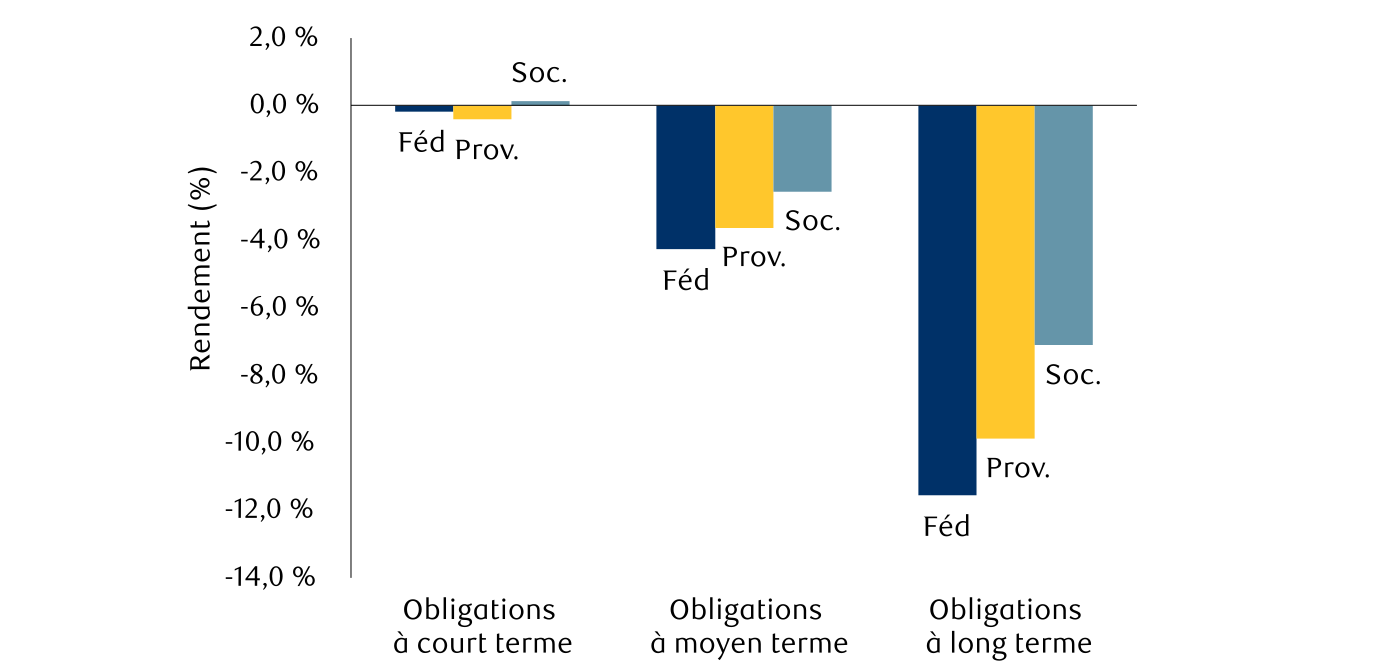
Sources : RBC GMA, FTSE Russell.
Composition de l’actif
Dans nos portefeuilles équilibrés et à actifs multiples, nous n’avons apporté aucun changement à la composition de l’actif. Les cibles neutres ont été conservées. Les indicateurs économiques et de marché continuent d’envoyer des signaux mitigés et contradictoires, ce qui entraîne une volatilité considérable sur les marchés des actions et des titres à revenu fixe. Les valorisations entre les marchés et au sein de ceux-ci sont également mitigées. Nous restons prudents à ce stade-ci dans un tel contexte et pensons qu’il y aura de meilleures occasions d’accroître le risque à l’avenir.
Récentes publications
Nous avons récemment célébré le 10e anniversaire du Fonds d’obligations de base Plus PH&N et avons souligné l’occasion en septembre en publiant Dix ans de fonds de base plus. Dans ce document, nous faisons état de nos observations sur l’adoption par les investisseurs de nos portefeuilles de base plus au Canada et des points de vue tirés d’une décennie de gestion de la stratégie de base plus.
Également en septembre, PH&N Institutionnel a établi un partenariat avec les CFA Societies à Vancouver, Calgary et Ottawa afin d’organiser un webinaire intitulé Emerging opportunities: The case for emerging markets (nouvelles occasions : l’attrait des marchés émergents). Le webinaire a été animé par les gestionnaires de portefeuille Laurence Bensafi (actions) et Polina Kurdyavko (titres à revenu fixe), qui ont discuté de leurs perspectives respectives pour les marchés émergents et des grands thèmes de la gestion de portefeuille.
1FTSE Russell
Fonds disponibles pour les investisseurs institutionnels canadiens
En savoir plusTrimestres précédents
Lisez les mises à jour d’autres trimestres ci-dessous.